Warehouse floors influence far more than the appearance of a facility. They carry forklifts, pallet jacks, storage systems, employees, and goods throughout every working day. As distribution activity increases, small flooring problems such as cracks, uneven surfaces, dusty concrete, or deteriorated joints can begin affecting movement and maintenance. A well-planned resinous flooring project can address these concerns while supporting clearer traffic routes, easier cleaning, and more predictable long-term upkeep.
Understand Traffic Before Choosing a System
The amount and type of traffic moving across a warehouse should influence flooring decisions. A low-volume storage building may experience relatively light movement, while a busy distribution center may have forklifts operating continuously across receiving, picking, packing, and loading areas.
Turning zones often experience greater wear than straight travel lanes because vehicle tires place additional stress on the surface. Loading docks and staging areas may also receive concentrated traffic.
Before selecting materials, managers should map these patterns. Understanding where the greatest mechanical loads occur helps determine where additional system thickness, reinforcement, or abrasion resistance may be necessary.
Concrete Condition Comes First
Existing concrete should be inspected carefully before any resinous system is installed. Cracks, damaged joints, spalling, previous coatings, oil contamination, and weak surface material can all affect the finished floor.
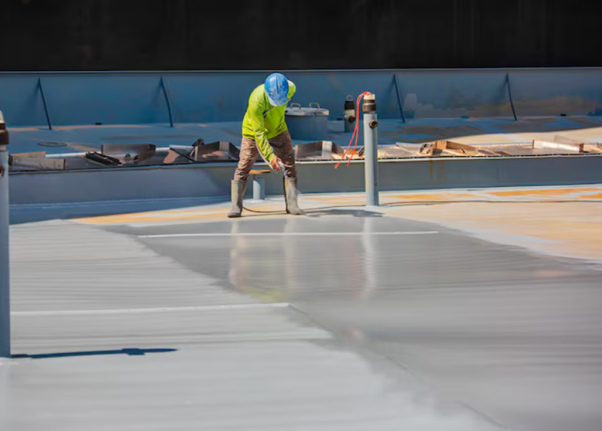
Experienced Warehouse Flooring Contractors should evaluate these conditions before specifying a coating system. Mechanical preparation, such as diamond grinding or shot blasting, can remove unsuitable surface material and establish the profile required for adhesion.
Repairs should also be completed where necessary. Installing a new coating over unresolved deterioration may improve appearance temporarily without solving the underlying problem.
Dust Control Can Improve Maintenance
Untreated or deteriorating concrete may release fine surface dust as vehicles and equipment move across it. Over time, this dust can settle on racks, products, machinery, and other warehouse surfaces.
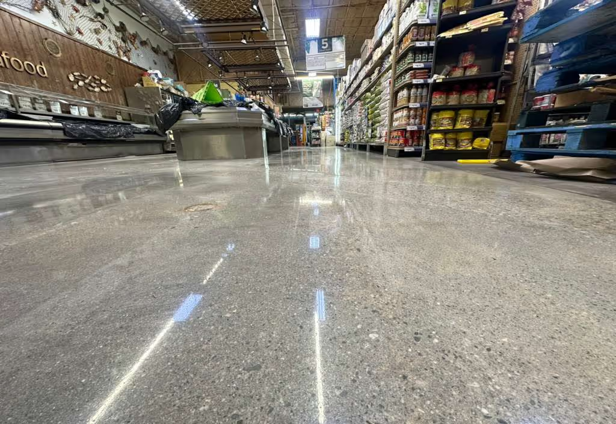
A properly installed resinous floor creates a sealed surface that is easier to clean than porous or worn concrete. This does not eliminate routine housekeeping, but it can help maintenance teams manage dust and debris more efficiently.
Seamless surfaces can also reduce the number of joints or irregular areas where dirt accumulates, although existing structural and movement joints still need appropriate treatment.
Traffic Markings Need Early Planning
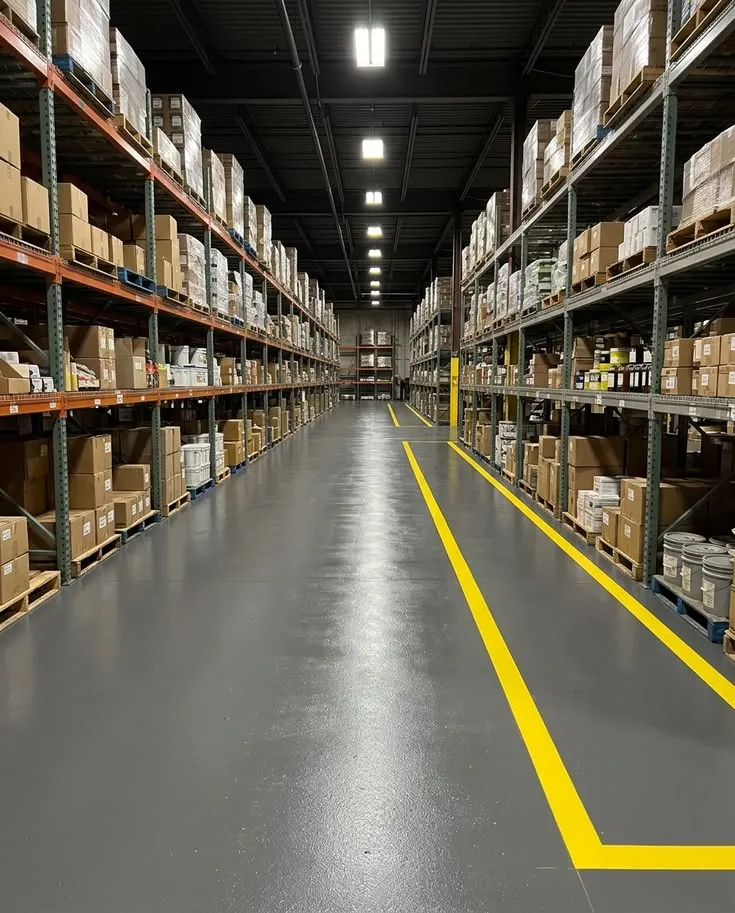
Modern warehouses often rely on clearly defined routes for pedestrians, forklifts, storage, loading, and restricted work areas. Floor markings can support these systems, but they should be planned as part of the overall installation rather than added without considering the coating beneath them.
Facility managers may want different colors for pedestrian walkways, equipment zones, loading areas, or safety boundaries. The layout should reflect actual operating patterns and provide clear visual guidance without becoming unnecessarily complicated.
Planning colors and markings before installation can also create a more coordinated finished surface.
Slip Resistance Should Match Each Zone
Warehouse floors may be exposed to rainwater near loading doors, oil around equipment, liquids from stored products, or other contaminants. These conditions can make traction an important part of flooring selection.
However, more texture is not always better. Highly aggressive finishes can make sweeping, scrubbing, or tyre-mark removal more difficult.
A qualified Warehouse Flooring Installer should consider the use of each area when recommending texture. Loading zones may require different characteristics from dry storage aisles or packing areas. Matching the surface profile to realistic exposure conditions can balance traction with cleanability.
Downtime Requires Careful Scheduling
Warehouse flooring projects can interfere with normal traffic patterns, so installation should be coordinated with operations teams. Pallets and equipment may need to be relocated, aisles temporarily closed, and forklift routes redirected.
Larger facilities may benefit from phased installation, allowing some sections to remain operational while others are prepared and coated. Even with phased work, sufficient time must be allowed for surface preparation, repairs, application, and curing.
Returning heavy equipment to a floor too early may compromise the new system. Clear scheduling helps protect the installation while reducing unnecessary operational disruption.
Maintenance Extends Beyond Cleaning
Routine cleaning is only one part of maintaining a warehouse floor. Managers should periodically inspect high-traffic areas, joints, loading zones, and locations exposed to frequent impact.
Small defects are generally easier to address before they spread. Damage caused by dropped equipment, pallet movement, or heavy traffic should therefore be evaluated promptly.
Staff should also use cleaning methods compatible with the installed resinous system. Excessively abrasive practices or unsuitable chemicals may shorten the useful life of the finish.
Conclusion
Warehouse flooring should be treated as operational infrastructure rather than simply a surface covering. Traffic patterns, concrete condition, dust control, safety markings, traction, installation scheduling, and ongoing maintenance all influence how effectively the floor supports daily activity.
A successful project begins with understanding how the facility actually functions. When the flooring specification reflects vehicle movement, working conditions, cleaning procedures, and future maintenance needs, the result can provide a more dependable foundation for warehouse operations while reducing avoidable flooring problems over time.