
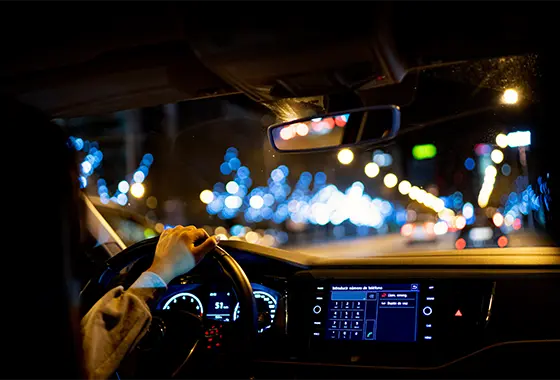
Drive down the same street every afternoon, and you begin recognizing almost everything. You know where the road bends, which intersections stay busy, and where parked cars usually appear. Return after sunset, though, and that familiarity can disappear surprisingly quickly.
Streetlights create patches of brightness and darkness. Pedestrians can be harder to notice, headlights approach from the opposite direction, and landmarks that normally help with orientation may no longer stand out. For a learner, the first few drives after dark are not simply daytime practice with less light.
Give Your Eyes Time to Adjust
Leaving a brightly lit parking lot and immediately entering a darker street can feel uncomfortable. Details that were obvious during daylight may take longer to recognize.
There is no benefit in treating the first few minutes as a race to settle in. Keep your attention on the road and allow yourself time to become comfortable with the change in visibility. A familiar route can be useful for an early night-driving experience because the road layout itself is not completely new.
Keep the Windshield Clear
Small marks on a windshield can become far more noticeable at night. Light from streetlamps and approaching vehicles may reflect through smudges that barely mattered during the day.
Check the glass before leaving. Mirrors deserve attention too. Clear surfaces will not remove every visibility challenge, but they can prevent an avoidable one from being added to the drive.
Learn Where to Direct Your Attention
Bright headlights can easily pull a beginner’s eyes toward them. Staring directly at glare, however, makes it harder to concentrate on the road ahead.
Keep looking toward the path of travel and continue scanning the surroundings. Lane markings, road edges, signs, and movement ahead all remain important. The goal is to gather useful information rather than allowing one bright object to dominate your attention.
Build Night Experience Gradually
A learner’s first drive after dark does not need to involve unfamiliar roads and heavy traffic. Adding too many new challenges together can make it difficult to tell what actually needs improvement.
Students completing drivers ed sugar land can build their driving knowledge and practical skills over time. When appropriate night experience is added gradually, learners have a chance to adjust their observation without abandoning the habits developed during daytime practice.
Look Carefully Around Pedestrian Areas
People can be less obvious after dark, particularly where lighting is uneven. Someone wearing dark clothing may not stand out immediately against the background.
Shopping areas, parking lots, intersections, and residential streets therefore deserve careful observation. Do not wait for a person to become obvious before paying attention. Scan places where pedestrians could reasonably appear.
Use Familiar Roads Differently
Knowing a road is helpful, but memory should never replace observation.
Perhaps you remember that an intersection is normally quiet at night. That does not tell you what is there tonight. A cyclist, pedestrian, stopped vehicle, or temporary road change can alter the situation. Drive according to what you can currently see rather than what you expect to see.
Do Not Save Night Practice for the Last Minute
Someone preparing for a driving test sugar land tx may become focused on practicing particular maneuvers repeatedly. Broader driving experience is also useful as learners work toward becoming independent.
The purpose of practicing in different suitable conditions is not to make test preparation harder. It is to help normal habits survive when the surroundings change. Observation and controlled decision-making should not disappear simply because the road looks different after sunset.
Know When Visibility Is Not Good Enough
There may be times when darkness is combined with rain, glare, tiredness, or unfamiliar surroundings. A learner does not have to prove anything by continuing into conditions that exceed their current ability.
Recognizing when a situation has become too demanding is itself a form of judgment. More experience can be added another day.
Conclusion
Night driving changes the details a learner depends on. Familiar landmarks fade, headlights become more noticeable, and things beside the road may take longer to spot. What worked automatically at noon may require more deliberate attention after dark.
That first night journey does not need to be ambitious. A familiar route, manageable conditions, and enough time to adjust can teach plenty. Through myfirstdrive.net, Texas learners can combine driver education and practical training with the wider experience needed to become comfortable when daylight is no longer doing part of the work for them.


